
BOSTON
Clinical Study

Study design1,2

The BOSTON trial was a Phase 3, global, randomized, open-label study that evaluated XPOVIO® in combination with bortezomib and dexamethasone versus bortezomib and dexamethasone alone in patients with multiple myeloma who have received 1–3 prior therapies.

Open label

(N=402)
Patients with multiple myeloma who have received 1–3 prior therapies were randomized into 2 study arms

Randomization*

XVd (n=195)
Once-weekly XPOVIO® + bortezomib with twice-weekly dexamethasone

Vd (n=207)
Twice-weekly bortezomib + four-times-weekly dexamethasone

Primary endpoint

  • Progression-free survival (PFS)

Key secondary endpoints

  • Overall response rate (ORR)
  • Response rate for responses ≥ very good partial response (VGPR)
  • Grade ≥ 2 peripheral neuropathy

† Non-key secondary endpoints included overall survival (OS), duration of response (DOR), overall response rate (ORR) for XVd crossover patients only, time to next treatment (TTNT), time to response (TTR), progression-free survival (PFS) for XVd crossover patients only, and PFS for post-XVd/Vd/XVd crossover treatment only, safety and tolerability of treatment, and patient-reported peripheral neuropathy.

Baseline patient characteristics1,2

XPOVIO® in combination with bortezomib and dexamethasone
(n=195)

Bortezomib and dexamethasone alone
(n=207)

66 (40–87)

67 (38–90)

Male

115 (59)

115 (56)

Female

80 (41)

92 (44)

<65

86 (44)

75 (36)

65–74

75 (38)

85 (41)

≥75

34 (17)

47 (23)

White

161 (83)

165 (80)

Black or African American

4 (2)

7 (3)

Asian

25 (13)

25 (12)

Other or missing

5 (3)

10 (5)

4 (0–23)

4 (0–22)

0–1

175 (90)

191 (92)

≥2

20 (10)

16 (8)

<30

3 (2)

10 (5)

30 to 59

53 (27)

60 (29)

≥60

139 (71)

137 (66)

I

56 (29)

52 (25)

II

117 (60)

125 (60)

III

12 (6)

16 (8)

Unknown

10 (5)

14 (7)

1

99 (51)

99 (48)

2

65 (33)

64 (31)

3

31 (16)

44 (21)

Stem Cell transplantation

76 (39)

63 (30)

Lenalidomide

77 (39)

77 (37)

Pomalidomide

11 (6)

7 (3)

Bortezomib

134 (69)

145 (70)

Carfilzomib

20 (10)

21 (10)

Daratumumab

11 (6)

6 (3)

97 (50)

95 (46)

del (17p)/p53

21 (11)

16 (8)

t (14;16)

7 (4)

11 (5)

t (4;14)

22 (11)

28 (14)

1q21

80 (41)

71 (34)

‡ Includes any of del (17p)/p53, t (14;16), t (4;14), 1q21.

The BOSTON Trial

The BOSTON Trial

The BOSTON Trial

Once-per-week selinexor, bortezomib, and dexamethasone versus twice-per-week bortezomib and dexamethasone in patients with multiple myeloma: a randomised, open-label, phase 3 trial

LEARN MORE

Demonstrated efficacy1,2

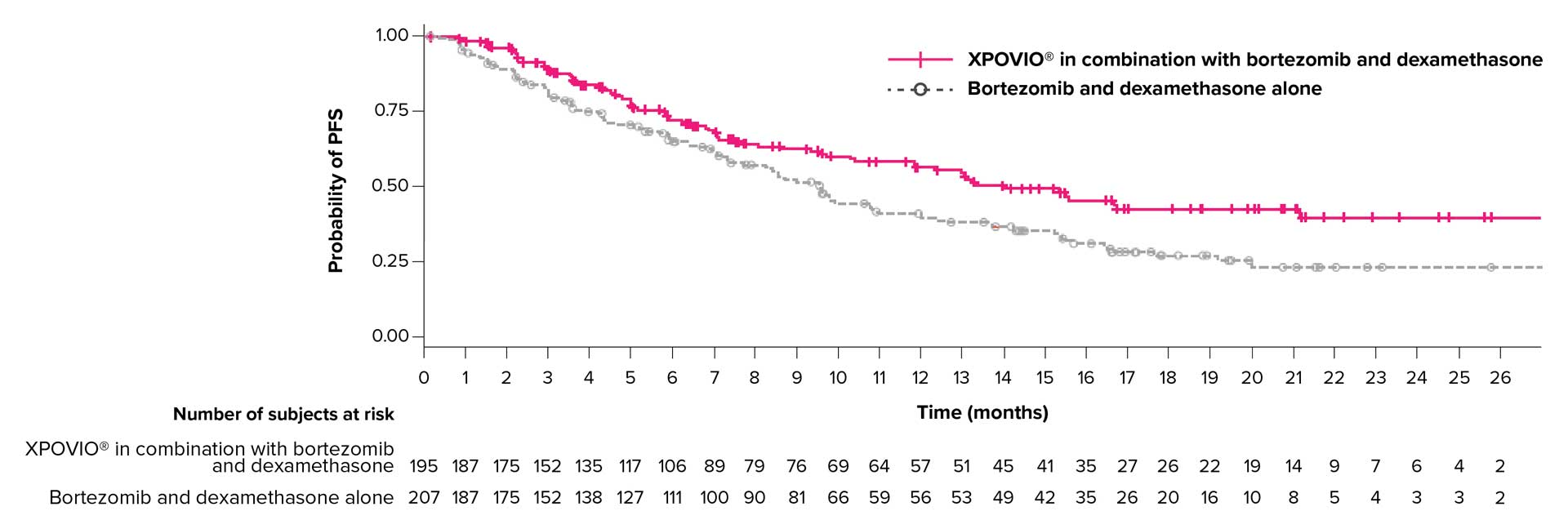
Median PFS for XPOVIO® in combination with bortezomib and dexamethasone was 13.93 months (HR: 0.70, 95% CI: 0.53–0.93; p=0.0075) vs. 9.46 months for bortezomib and dexamethasone alone.

Consistent with the overall population, XPOVIO® in combination with bortezomib and dexamethasone significantly reduced the risk of progression or death vs. bortezomib and dexamethasone alone in select subgroups, including patients with an age ≥65 years, high-risk cytogenetics (including any of del (17p)/p53, t (14;16), t (4;14), 1q21), and one prior line of therapy.

The prespecified subgroup analysis of patients who had previous proteasome inhibitor therapy was trending towards significance.

Limitations of subgroup analysis:

  • These subgroup analyses were exploratory in nature, were not included in the study objectives, and did not control for type 1 error.
  • These prespecified subgroup analyses were neither powered to assess PFS nor adjusted for multiplicity.

OS was not reached in patients receiving XPOVIO® in combination with bortezomib and dexamethasone (HR: 0.84, 95% CI: 0.57–1.23; p=0.1852) vs. 25 months in patients receiving bortezomib and dexamethasone alone (median follow-up: 17.3 months vs. 17.5 months, respectively)

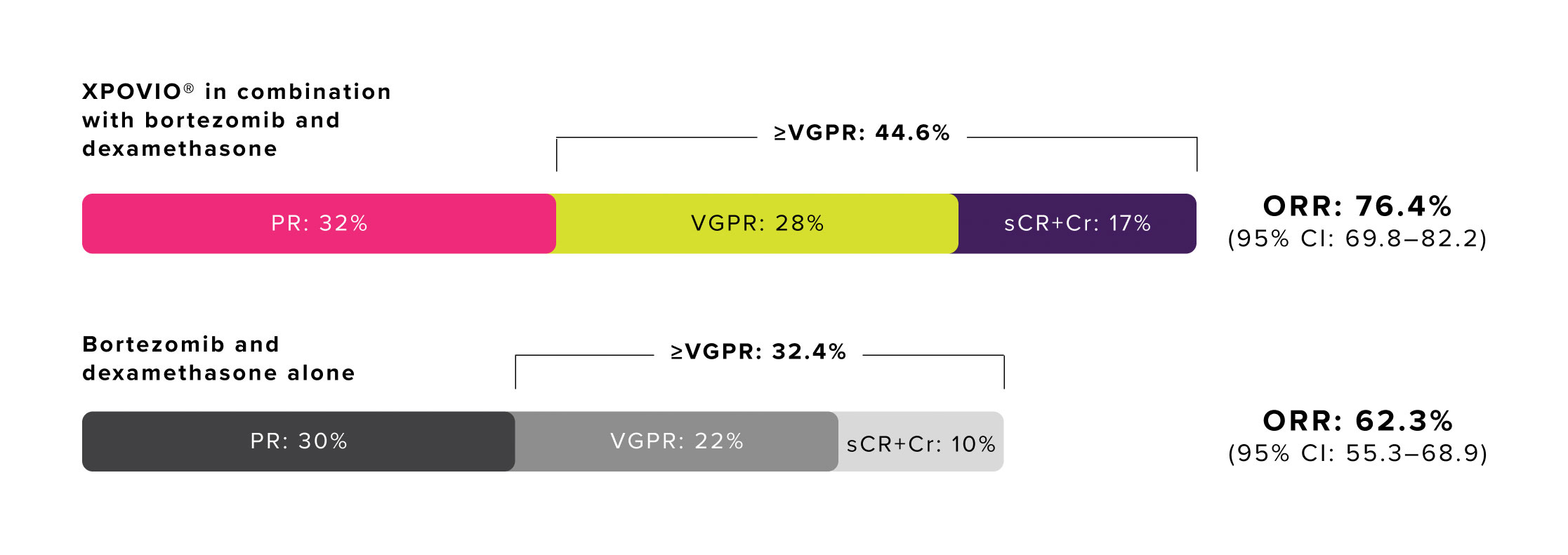
ORRs demonstrated in the BOSTON trial (p=0.0012)
Rapid response with XPOVIO®

Median TTR

1.1

months

XPOVIO® in combination with bortezomib and dexamethasone

vs

1.4

months

Bortezomib and dexamethasone alone

Durable response with XPOVIO®

Median DOR

20.3

months

XPOVIO® in combination with bortezomib and dexamethasone

vs

12.9

months

Bortezomib and dexamethasone alone
Safety profile

The most frequent treatment-emergent adverse events in >10% of patients1,2

XPOVIO® in combination with bortezomib and dexamethasone
(n=195)

Bortezomib and dexamethasone alone
(n=204)

All Grades
n (%)

Grade ≥ 3
n (%)

All Grades
n (%)

Grade ≥ 3
n (%)

Thrombocytopenia

117
(60)

77
(39)

55
(27)

35
(17)

Anemia

71
(36)

31
(16)

47
(23)

21
(10)

Neutropenia

29
(15)

17
(9)

12
(6)

7
(3.4)

Cataract

42
(22)

17
(9)

13
(6)

3
(1.5)

Vision Blurred§

25
(13)

1
(0.5)

13
(6)

0

Nausea

98
(50)

15
(8)

20
(10)

0

Diarrhea

63
(32)

12
(6)

51
(25)

1
(0.5)

Vomiting

40
(21)

8
(4.1)

9
(4.4)

0

Constipation

33
(17)

0

35
(17)

3
(1.5)

Fatigue

82
(42)

26
(13)

37
(18)

2
(1.0)

Asthenia

48
(25)

16
(8)

27
(13)

9
(4.4)

Pyrexia

30
(15)

3
(1.5)

22
(11)

2
(1.0)

Edema peripheral

23
(12)

1
(0.5)

26
(13)

0

Upper respiratory tract infection§

57
(29)

7
(3.6)

44
(22)

3
(1.5)

Pneumonia§**

35
(18)

27
(14)

34
(17)

24
(12)

Bronchitis††

24
(12)

4
(2.1)

20
(10)

1
(0.5)

Weight decreased

51
(26)

4
(2.1)

25
(12)

2
(1.0)

Decreased appetite

69
(35)

7
(3.6)

11
(5)

0

Hypokalemia

19
(10)

8
(4.1)

10
(5)

5
(2.5)

Neuropathy peripheral§

63
(32)

9
(5)

96
(47)

18
(9)

Dizziness

24
(12)

1
(0.5)

8
(3.9)

0

Headache

19
(10)

1
(0.5)

11
(5)

0

Taste disorder§

19
(10)

0

4
(2)

0

Insomnia

31
(16)

2
(1.0)

32
(16)

4
(2)

Cough

35
(18)

1
(0.5)

30
(15)

0

Dyspnea§

26
(13)

1
(0.5)

35
(17)

5
(2.5)

§ Includes multiple preferred terms:
Vision blurred includes blurred vision, visual acuity reduced and visual impairment.
Upper respiratory tract infection includes upper respiratory infection, nasopharyngitis, pharyngitis, respiratory syncytial virus infection, respiratory tract infection, rhinitis, and viral upper respiratory infection.
Pneumonia includes pneumonia, pneumonia pneumococcal, hemophilus infection, pneumonia bacterial, pneumonia fungal, pneumonia influenza, pneumonia parainfluenzae viral, pneumonia respiratory syncytial viral, and pulmonary sepsis.
Neuropathy peripheral represents high level term peripheral neuropathies NEC.
Taste disorder includes taste disorder, ageusia, and dysgeusia.
Dyspnea includes dyspnea and dyspnea exertional.
¶ Grade 5 anemia was reported in one patient (0.5%) in the Vd arm.
** Grade 5 pneumonia was reported in 3 patients (1.5%) in the XVd arm and 3 patients (1.5%) in the Vd arm. These events were considered to be not related to study treatment.
†† Includes one (0.5%) Grade 5 event in the XVd arm considered not related to study treatment.

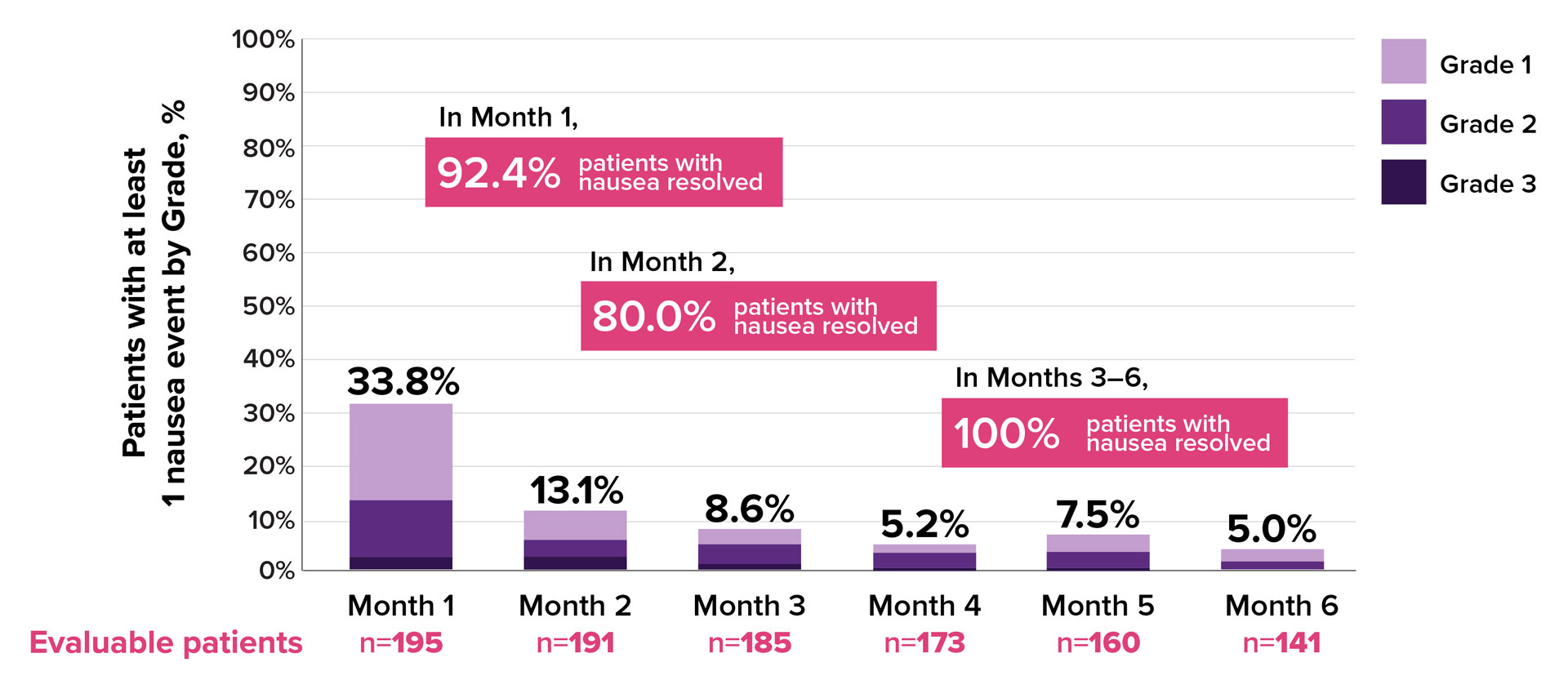
Treatment-related nausea with XPOVIO® in combination with bortezomib and dexamethasone was generally transient and manageable1,3

Percentage of patients experiencing nausea events per month in patients receiving XPOVIO® in combination with bortezomib and dexamethasone in the BOSTON trial3

Percentage of patients experiencing nausea decreased in the first month of receiving XPOVIO® in combination with bortezomib and dexamethasone using appropriate antiemetic measures.3

Patients receiving XPOVIO® in combination with bortezomib and dexamethasone experienced lower levels of grade ≥ 2 peripheral neuropathy1

21%

Grade ≥ 2 peripheral neuropathy

XPOVIO® in combination with bortezomib and dexamethasone

34%

Grade ≥ 2 peripheral neuropathy

Bortezomib and dexamethasone alone

CI, confidence interval; CR, Complete Response; DOR, duration of response; HR, hazard ratio; ORR, overall response rate; OS, overall survival; PFS, progression-free survival; PR, partial response; sCR, Stringent Complete Response; TTNT, time to next treatment; TTR, time to response; VGPR, Very Good Partial Response.

References
1. FORUS Therapeutics Inc. XPOVIO® (selinexor tablets) Product Monograph. March 22, 2024.
2. Grosicki S, et al. Once-per-week selinexor, bortezomib, and dexamethasone versus twice-per-week bortezomib and dexamethasone in patients with multiple myeloma (BOSTON): a randomised, open-label, phase 3 trial. Lancet. 2020;396(10262):1563-1573.
3. Data on File. Karyopharm Therapeutics Inc. 2021.